
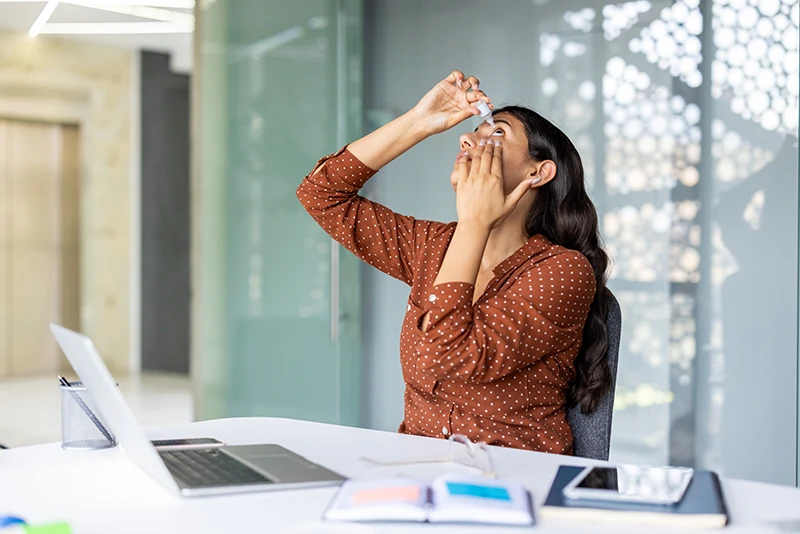
Dry, irritated eyes can make everyday activities frustrating. Whether your eyes burn while using the computer, feel gritty throughout the day, or water excessively when outdoors, dry eye disease may be the cause.
Dry eye affects millions of people, but women are significantly more likely to experience it than men. Hormonal changes, autoimmune conditions, and lifestyle habits can all contribute to this increased risk.
At Prairie Vista Eye & Optical in Liberal, we help patients identify the root cause of their dry eye symptoms and recommend treatment options designed to improve long-term comfort and eye health. Learn why dry eye is more common in women than men and how you can finally get the relief you deserve.
What is dry eye?
Dry eye occurs when the eyes do not produce enough quality tears or when tears evaporate too quickly. Tears are essential for keeping the eyes lubricated, comfortable, and protected.
When the tear film becomes unstable, symptoms may include:
- Burning or stinging
- Redness
- Blurry or fluctuating vision
- Grittiness or a sandy sensation
- Excessive tearing
- Light sensitivity
- Tired eyes
- Discomfort while wearing contact lenses
Many patients are surprised to learn that watery eyes can be a symptom of dry eye. In response to irritation, the eyes may produce excess tears that do not properly lubricate the surface of the eye.
Why does dry eye affect more women than men?
Women experience dry eye at much higher rates than men, accounting for more than two-thirds of dry eye cases.¹ Multiple factors contribute to this difference.
Hormonal changes
Hormones play an important role in maintaining a healthy tear film. Changes in estrogen and androgen levels can affect the meibomian glands, which produce oils that help prevent tears from evaporating too quickly.
Women may notice dry eye symptoms during:
- Pregnancy
- Breastfeeding
- Perimenopause
- Menopause
- Use of hormonal birth control
Menopause is one of the most common times for dry eye symptoms to worsen because hormonal fluctuations can significantly affect tear quality and stability.
Autoimmune conditions
Women are also more likely to develop autoimmune diseases, which are closely associated with dry eye disease. In fact, women may have up to a fourfold higher risk of developing autoimmune diseases compared to men.²
Conditions linked to dry eye include:
- Sjögren’s syndrome
- Rheumatoid arthritis
- Lupus
- Thyroid disorders
These conditions can decrease tear production and increase inflammation on the surface of the eyes. When the immune system mistakenly attacks healthy glands involved in tear production, chronic dryness and irritation can develop.
Because autoimmune conditions occur more frequently in women, they can play a major role in both the onset and persistence of dry eye symptoms.
Lifestyle factors
Certain daily habits and environmental exposures may also contribute to dry eye symptoms.
For example, eye makeup and skincare products applied near the eyelids can sometimes interfere with the oil glands responsible for maintaining a stable tear film. Incomplete makeup removal may also contribute to irritation along the eyelid margins.
Additional factors that may worsen dry eye include:
- Prolonged screen use
- Contact lens wear
- Dry indoor air
- Air conditioning or heating
- Smoke exposure
- Dehydration
Dry eye treatment options
Dry eye treatment is most effective when it addresses the underlying cause of symptoms. At Prairie Vista Eye & Optical, treatment plans are personalized based on each patient’s specific needs and severity of symptoms.
Treatment options may include:
- Artificial tears and lubricating eye drops
- Prescription dry eye medications
- Warm compress therapy
- Nutritional support, including omega-3 supplements
- Eyelid hygiene products and cleansers
- Lifestyle and environmental recommendations
- In-office dry eye procedures
LipiFlow® treatment for dry eye
At Prairie Vista Eye & Optical, our eye doctors provide LipiFlow® treatment for patients with meibomian gland dysfunction (MGD), one of the leading causes of dry eye disease.
The meibomian glands produce the oily layer of the tear film that helps prevent tears from evaporating too quickly. When these glands become blocked, irritated, or unhealthy, dry eye symptoms can worsen.
LipiFlow® uses controlled heat and gentle massage to help clear blocked glands and restore healthier oil flow. By improving gland function, LipiFlow® can help reduce dryness, irritation, and fluctuating vision associated with evaporative dry eye.
Help your eyes feel comfortable again
Dry eye symptoms should not be ignored, especially when they begin affecting work, reading, driving, or overall comfort throughout the day.
At Prairie Vista Eye & Optical in Liberal, we provide comprehensive dry eye evaluations and personalized treatment plans to help patients achieve clearer, more comfortable vision.
If you are experiencing ongoing dryness, irritation, watery eyes, or fluctuating vision, schedule an appointment with our team today.
References:
- Why do dry eyes affect women more than men? optometrists.org
- Why women have more autoimmune diseases than men: an evolutionary perspective. pmc.ncbi.nlm.nih.gov