
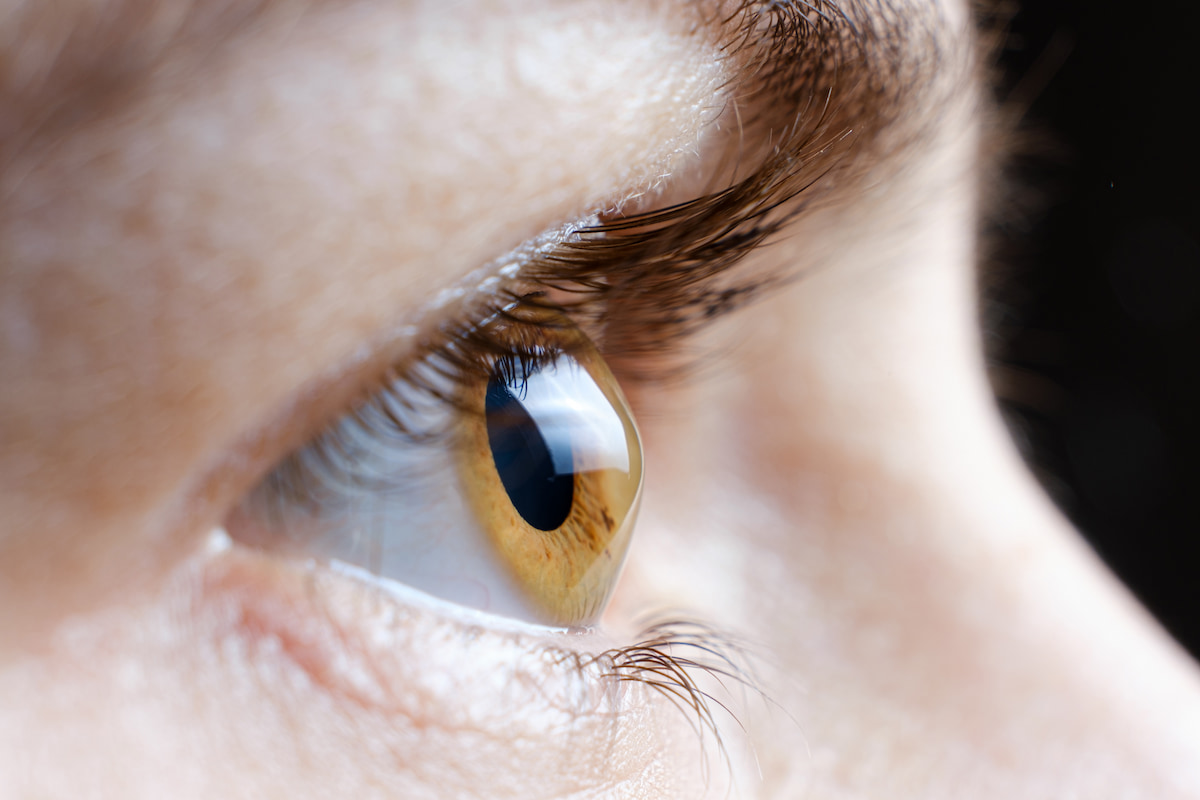
Keratoconus can make vision blurry, distorted, or difficult to correct, even with an updated glasses prescription or standard soft contact lenses. It changes the shape of the cornea, the clear front surface of the eye, affecting how light focuses inside the eye.
For some patients, scleral lenses provide sharper, more stable vision than glasses or traditional soft contacts. They may be part of a personalized keratoconus treatment plan.
Why can keratoconus be difficult to correct?
A healthy cornea has a smooth, rounded shape. With keratoconus, the cornea becomes thinner and gradually bulges outward, creating an irregular surface. As a result, light may scatter rather than focus precisely on the retina.
This can lead to:
- Blurry or distorted vision
- Increasing or irregular astigmatism
- Glare, halos, or reduced night vision
- Frequent prescription changes
- Vision that stays unclear with glasses or standard contacts
Glasses and soft toric lenses can help some people, especially earlier in the condition. But as corneal irregularity increases, they may not provide consistent clarity or a stable fit.
What do scleral lenses do differently?
Scleral lenses are large, rigid gas-permeable lenses that rest on the sclera, or white part of the eye, rather than directly on the cornea. The lens vaults over the cornea and holds a layer of fluid between the lens and the eye.
This design creates a smooth optical surface over the irregular cornea, which may improve vision quality. Because scleral lenses rest on the sclera, they can also provide a stable fit for patients who struggle with smaller contact lens designs.
Scleral lenses do not reshape the cornea or stop keratoconus from progressing. Their role is to improve functional vision and comfort when they are an appropriate fit.
When might scleral lenses be recommended?
A specialty lens evaluation may be appropriate if you have keratoconus and experience:
- Distorted or fluctuating vision with an updated prescription
- High or irregular astigmatism
- Contacts that shift, blur, or become uncomfortable during the day
- Difficulty finding a conventional lens that fits well
- Dry eye symptoms that affect contact lens wear
Not every person with keratoconus needs scleral lenses. Your doctor will consider your corneal shape, prescription, eye health, visual goals, and how well you see with other correction options.
Vision correction and keratoconus progression are different
Scleral lenses can improve vision, but they do not address the underlying corneal weakening associated with keratoconus. If testing shows the condition is progressing, your eye doctor may recommend a referral to a corneal specialist to discuss corneal cross-linking, a procedure designed to strengthen the cornea and help slow further change.
Specialty lenses may still be needed after cross-linking to provide the clearest possible vision.
What happens during a scleral lens evaluation?
A scleral lens fitting involves detailed measurements of your prescription, corneal shape, and eye surface to customize the lens for your eyes. After the lenses arrive, you will learn how to insert, remove, fill, and care for them safely.
Follow-up visits allow your doctor to refine the fit and monitor your vision, comfort, and eye health over time.
Explore specialty contact lenses for keratoconus
Keratoconus can change how you see, but glasses and soft contacts are not the only options. A contact lens exam can determine whether scleral lenses may provide clearer, more comfortable vision.
Schedule an appointment in Liberal to discuss your contact lens options.